
News
Promotion of the "PV + Agriculture" model achieves dual benefits of land utilization and energy production.
2025/12/6
Viewed:
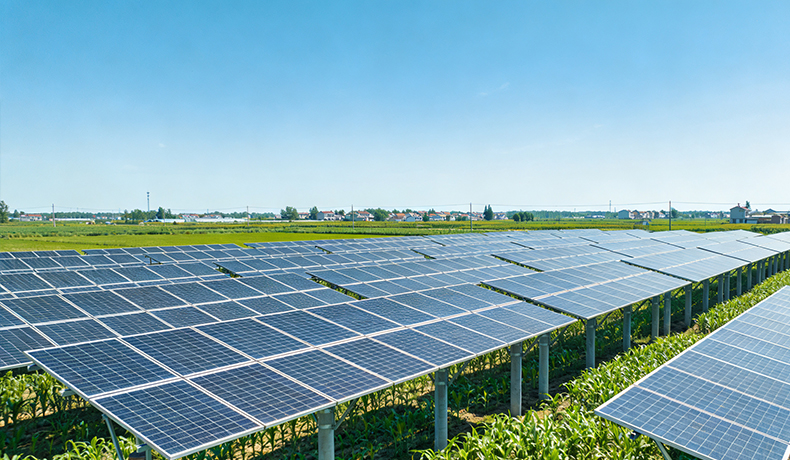
Driven by the dual pressures of land resource constraints and growing demand for clean energy, the innovative integrated model of "PV + Agriculture" is accelerating its global promotion, demonstrating strong vitality and broad prospects. By scientifically installing photovoltaic (PV) panel arrays above agricultural lands such as farmlands, pastures, and aquaculture ponds, this model realizes the three-dimensional and efficient utilization of land through "green power generation on the panels and green planting/breeding under the panels," providing a win-win solution for the sustainable development of agriculture and the transformation of the energy structure.
The core value of this model lies in the optimal allocation of space resources. PV panels are installed several meters above the ground, and the space below can be used for various agricultural production activities according to local conditions. In the field of planting, it is suitable for cash crops that prefer shade or have low light requirements (such as Chinese medicinal materials, edible fungi, and some vegetables), shade-tolerant forage grass, or seedling cultivation. In the field of breeding, it is widely applied to aquaculture water surfaces such as fish ponds and shrimp ponds. The shading effect of PV panels can effectively reduce surface temperature in summer, reduce water evaporation, improve the local microclimate, create a more suitable growth environment for some crops and aquatic organisms, and even help improve quality or yield under certain conditions. At the same time, PV power generation provides a clean and low-cost power source for agricultural irrigation, temperature control, lighting, etc., reducing production costs.
Technical adaptability is the key to the success of this model. The design of PV brackets must balance structural strength, light transmittance adjustment (such as the use of adjustable tilt brackets or appropriately increasing the spacing between modules), and adaptability to large-scale agricultural machinery operations. For module selection, products with stronger weather resistance such as bifacial glass modules are preferred to cope with the agricultural environment. The application of intelligent management systems is becoming increasingly important, which can realize the monitoring and regulation of light, temperature, and humidity, optimizing the synergistic benefits of light and agriculture. Various regions are actively exploring "PV + characteristic agriculture" sub-models suitable for local climate conditions, soil characteristics, and dominant agricultural products, accumulating valuable experience.
Policy guidance has injected strong momentum into the promotion of the model. Governments of many countries and regions have recognized its comprehensive benefits in ensuring food security (without occupying additional arable land), promoting rural industrial revitalization, and reducing emissions and carbon, and have successively introduced supportive policies. These policies may involve land use preferences, electricity price subsidies, priority grid connection, or the setting of special development goals for agriculture-PV complementary projects, creating a favorable environment for project investment. In addition, using the income from PV power generation to support agricultural modernization and the improvement of rural infrastructure has also become an effective way to promote rural development.
Of course, the healthy development of the model still requires continuous exploration and optimization. It is crucial to scientifically assess the long-term impact of PV arrays on the growth of specific crops, soil moisture, and biodiversity in different scenarios, which requires in-depth collaboration between agronomy and PV technology. Refined management and initial investment costs are also practical considerations that need to be addressed. However, with the maturity of design concepts, the improvement of technology, the continuous optimization of costs, and the demonstration effect of more successful cases, the "PV + Agriculture" model is expected to be popularized on a larger scale. It not only effectively alleviates the land demand pressure of PV power plants but also becomes a useful exploration and effective supplement to improve the comprehensive output efficiency of land, empower modern agriculture, increase farmers' income, and help achieve carbon neutrality goals, contributing innovative strength to a sustainable future.